

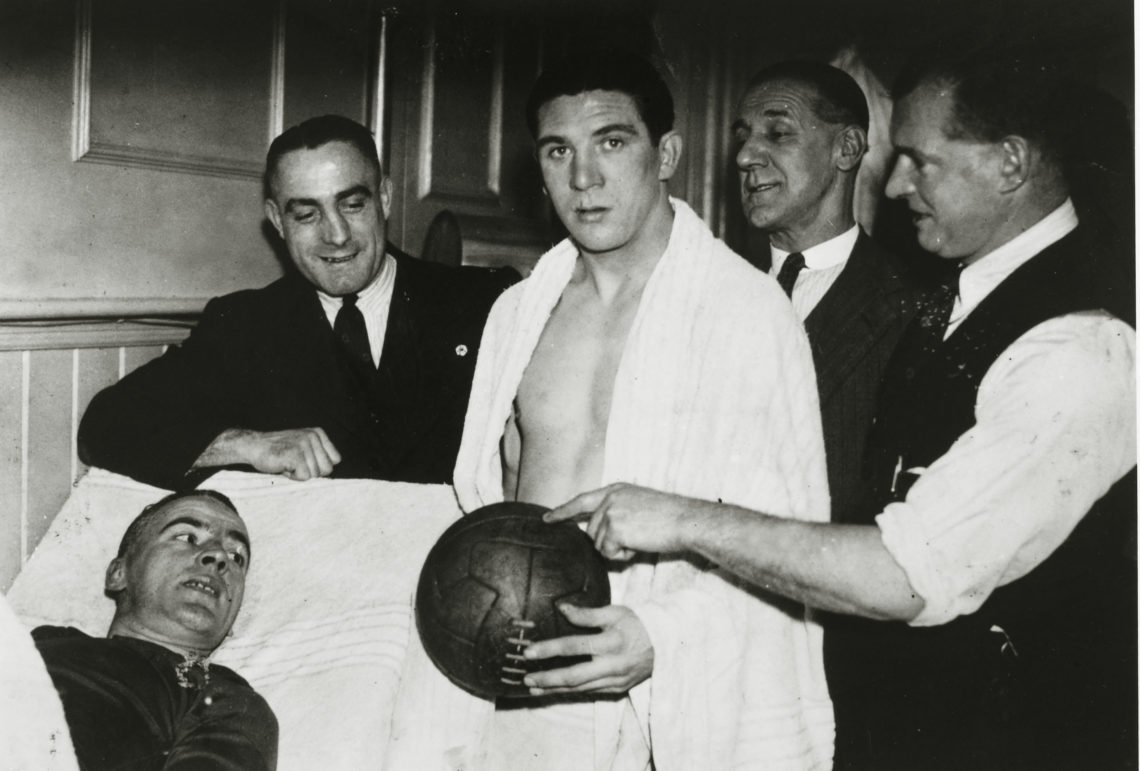


In 1912, not far from the bustling docks of Southampton, one of the best players to go on and grace the game was born. That man was Ted Drake.
Southampton have had many great players to grace Southampton’s stadium over the years. The likes of Matt Le Tissier, Peter Shilton, Alan Ball and many more have all obtained legendary status for the Saints.
But such as these were more recent players to filter through the club – some legendary names of yesteryears are often overlooked, or forgotten.
This includes the iconic Ted Drake – one of the best footballers of his generation.
- Story by Liam Harding, great-grandson of Drake
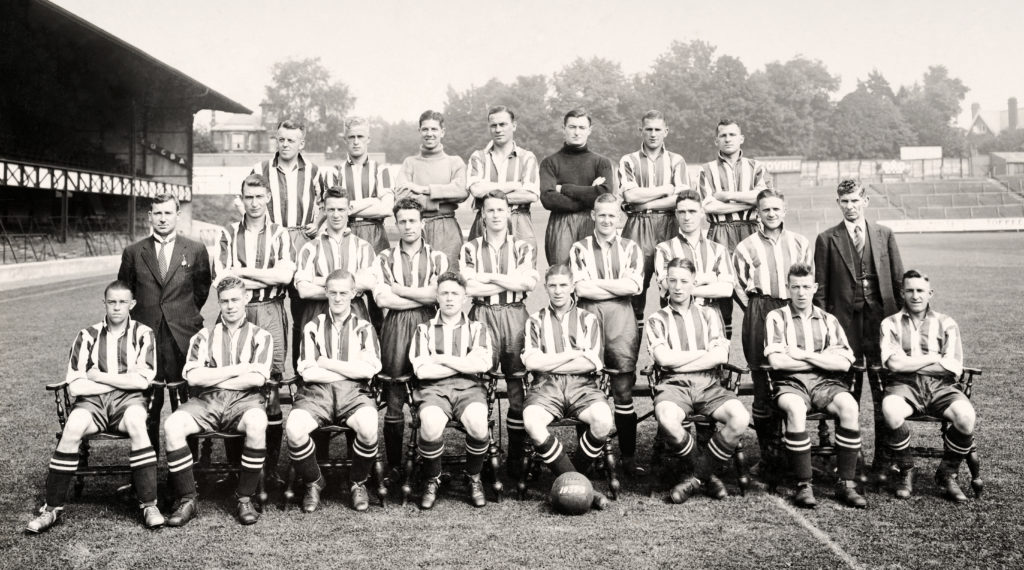
The story of Southampton’s Ted Drake
As an aspiring young Saints fan looking to make it into the big time, Drake idolised local hero Bill Rawlings, who was Southampton’s top striker at the time and would end up netting 175 times in 327 games.
While Ted was at school, Tottenham came calling for him and offered the future Arsenal legend a trial match; however, he was unable to accept the offer due to injury.
After leaving school, he became a gas reader while at the same time playing for non-league club Winchester City of the Hampshire League.
During his time with The Citizens, he helped the side lift the 1929/30 Northern section of the Hampshire League and assisted them to glory in the Hampshire Senior Cup for the first time just before leaving in the summer of 1931 for Southampton.
Within two seasons of signing professionally with the Saints, Ted was the club’s main talisman, and already one of the most prolific in Saint’s history.
That’s why it was no surprise when Arsenal’s Herbert Chapman came knocking on his door to recruit the Englishman.
Despite Arsenal being on their way to the first of three consecutive First Division league titles during the 1932/33 season, Drake rejected Chapman’s bid.
Arsenal snap up Drake…
In March 1934, while the Saint was the top-goalscorer in the Second Division with 22 goals, George Allison, now Arsenal manager following the death of Chapman, swooped in and signed Drake at last for a mere fee in today’s footballing language of £6,500.
Later that month, the man who had been hailed as ‘the greatest centre forward in the world’ by Allison scored on his debut for the Gunners as they narrowly scraped past Wolves to win 3-2 at Highbury.
During his first real season at Arsenal, Drake created a reputation for himself in the game as a tough, fast, and uncompromising attacker by force of nature, racking up 44 strikes throughout the 1934/35 campaign – a record for the most goals netted in a season at the club.
This rampage saw Ted score three hat-tricks and pick up four four-goal hauls, as well as his first Arsenal league title in 1935, which witnessed the Gunners round up their one and only league title Treble in history.
England debut beckons
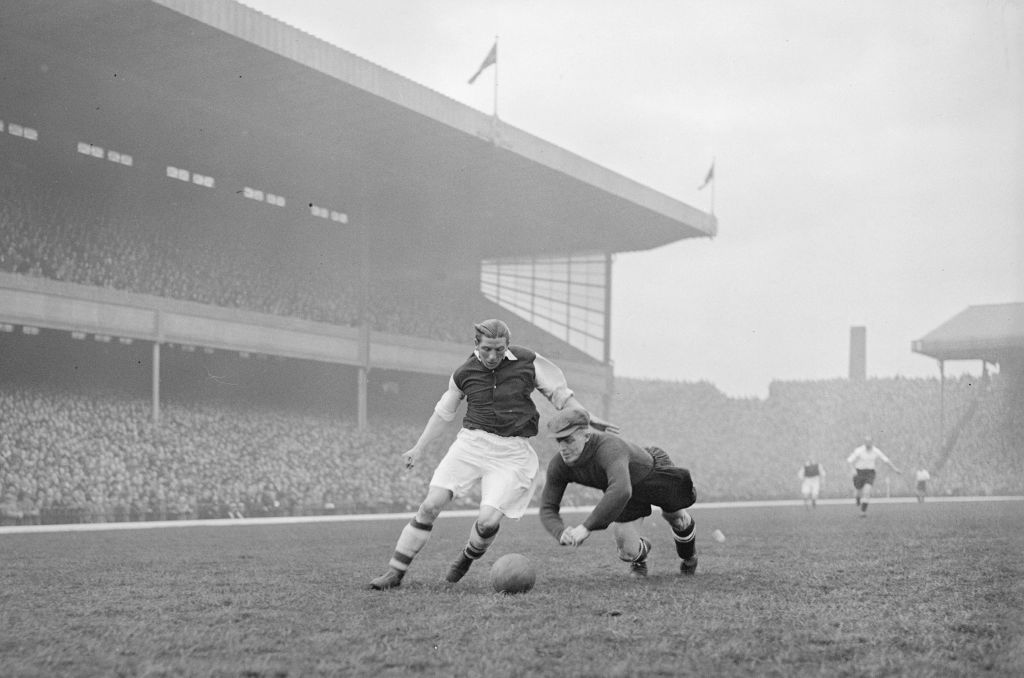
The season also saw the striker make his England debut in the ‘Battle of Highbury’ against World Cup winners Italy in November 1934, which The Three Lions won 3-2.
Drake scored the third goal of the match for England, marking the first of six strikes in five matches for his country during the decade.
After struggling with his attacking form, Drake turned up at Villa Park on December 14th, 1935, in need of some goals to rescue his position in the side.
Wearing the world’s biggest bandage, he went on to break the record for the most goals scored in a top-flight game of English football, which stands to this day, scoring every single goal in Arsenal’s 7-1 triumph over Aston Villa.
Drake wants the FA Cup
By the end of the 1935/36 season, with the league title out of sight, there was only one competition the Gunners could get their hands on – the FA Cup.
In the week leading up to the final, there was a slim chance of Ted playing due to injury; however, in the final 24 hours before kickoff, he was chosen for the starting line-up.
The encounter proved to be more challenging for Arsenal against Second Division side Sheffield United than expected.
In the final quarter of the game, with Arsenal needing a hero, Drake rose to the occasion, popping up with the winning goal which saw the Gunners lift the Cup 1-0.
Many years later, in the 1980s, when being asked about the moment from the comforts of his home by a London journalist, Drake recalled: “I remember when I scored the winning goal, I shook hands with my teammates—we didn’t kiss and all that nonsense in those days.”
During the 1937/38 season, Drake reached his second league title at Arsenal as the top goalscorer for the fourth consecutive year with 18 goals, despite being knocked out in the latter stage of the campaign by injury.
An abrupt end to a sparkling career
On September 1, 1939, World War Two broke out, which meant the football season was abandoned, bringing Ted’s career to a grinding halt days after scoring four goals in a league match at home versus Sunderland.
Despite his playing career coming to a premature end, he had become the quickest player in Arsenal history to net 100 goals in only 108 matches – a record even the greats Ian Wright and Thierry Henry failed to beat.
While on a personal training course during the war years, Drake picked up a back injury from a swimming accident, forcing him to hang up his boots for good come the end of the war in 1945.
After finishing his war duties in the Royal Air Force and as a personal trainer, Drake found another avenue through coaching to get back into the game.
Into management Drake goes
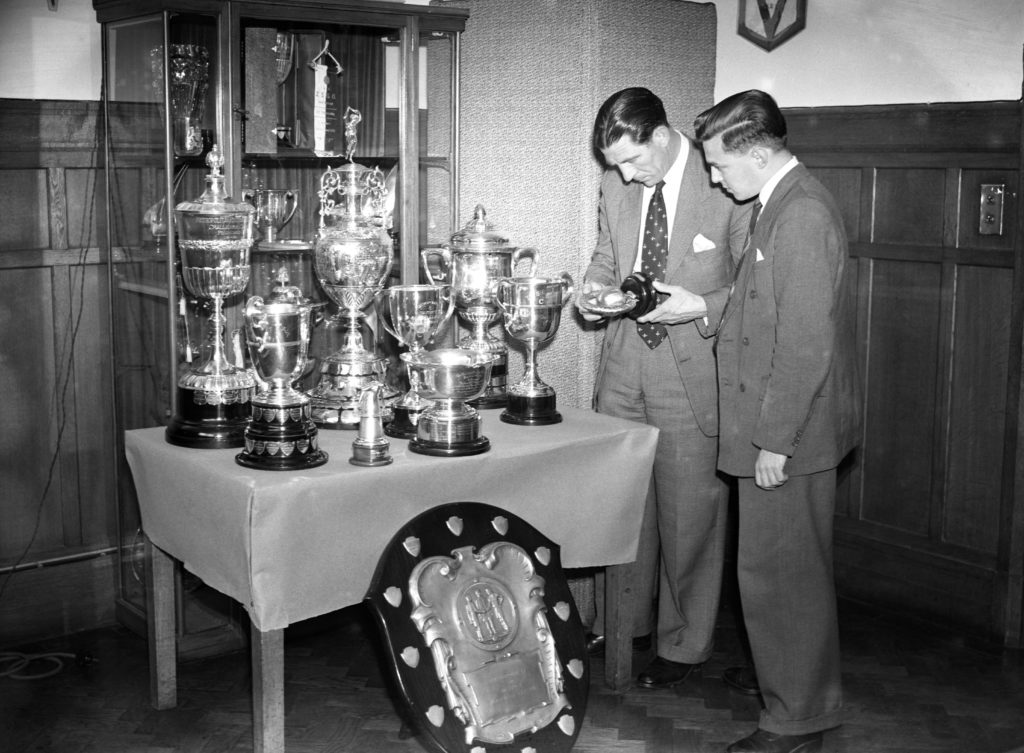
In 1946, the retired footballer turned into a young and hungry manager starting off from humble beginnings, in charge of non-league Hendon in the 1946/47 Athenian League campaign, taking them to ninth in the table.
At the end of the season, Third Division outfit Reading requested Drake to take hold of their reins, which he accepted.
He led the side to second in the table in the 1948/49 and 1951/52 seasons. The Royals weren’t able to get promoted to the Second Division as only the first in the table gained automatic promotion at a time when there were no playoffs.
Title glory with Chelsea
In 1952, Chelsea took Drake to Stamford Bridge, and just after signing, he said that he would need three years to win the title. At the end of the 1954/55 season, Chelsea had won the top flight of English football for the first time, with Drake’s manifesto coming true.
During the post-match celebrations, after Ted had become the first player and manager to herald the top tier of English football, he declared: “This is the happiest day of my life. I was asked, ‘Would we win the Cup?’ I thought we might, but I thought we had a greater chance of winning the Championship.”
By 1962, with Chelsea facing the prospect of probable relegation from the First Division, Drake made way for Tommy Docherty, who was unable to stop the Blues from slipping into the Second Division.
Drake later enjoyed his time as Life President, assistant manager, and scout at Fulham in the late 1960s and 1970s.
After his testimonial match was held at Craven Cottage in 1978, the ‘gentleman’ who had been involved in football for over half a century retired.
In 1995, Drake passed away at the age of 82 in his home at Raynes Park in Wimbledon after an admirable life of footballing achievements.
Not long before his death, while being interviewed in the main stand of Southampton’s old Dell, he expressed his ever-faithful love for Southampton: “There’s always been a saying since I was a little boy: ‘Once a Saint, always a Saint,’ and I shall remain a Saint for the rest of my days.”